The traditional narrative of early 20th-century American labor organization privileges industrial factory corridors and midwestern manufacturing hubs, rendering agricultural labor dynamics on colonial peripheries invisible. The corporate-state apparatus of the Territory of Hawaii functioned as a highly consolidated sugar production monopsony, engineered specifically to suppress labor costs through calculated ethnic stratification.
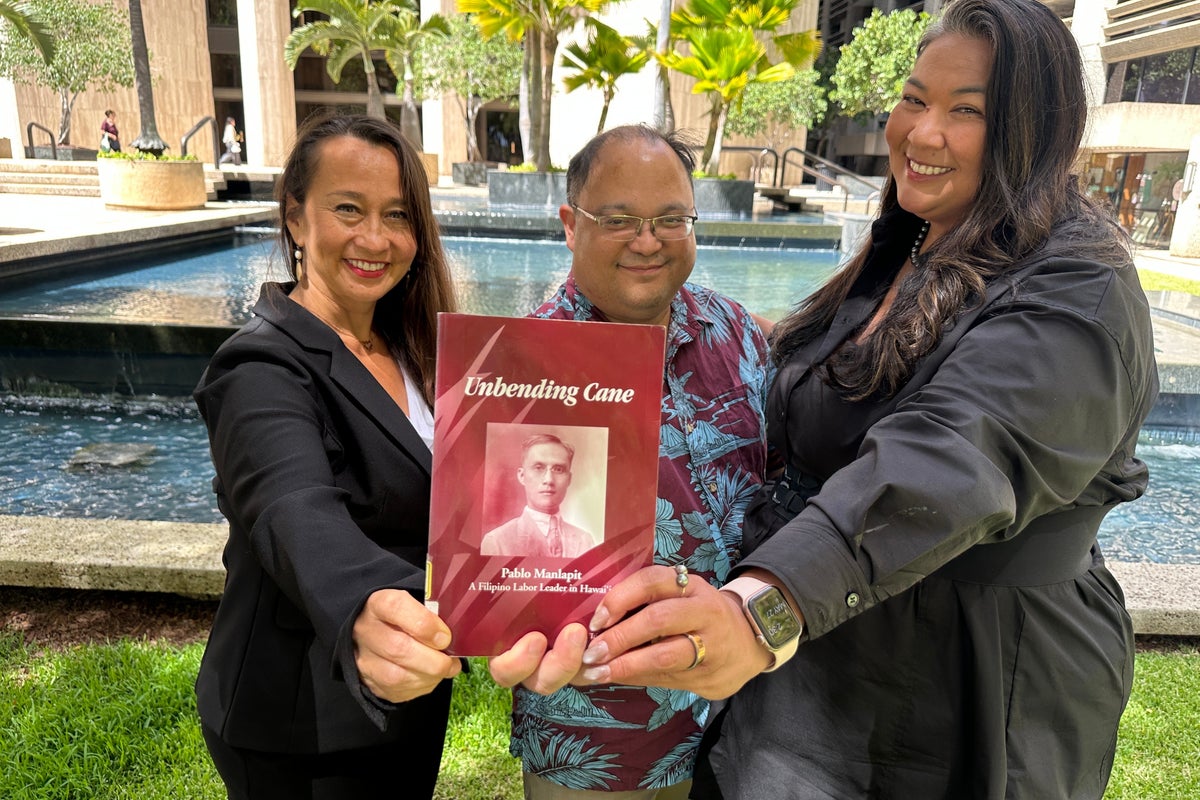
A contemporary legal movement led by the Hawaii Filipino Lawyers Association (HFLA) seeks to posthumously overturn the 1924 conspiracy conviction of Pablo Manlapit, Hawaii’s first licensed Filipino attorney and pioneering labor organizer. This legal intervention serves as an analytical window into the economic mechanics of plantation labor exploitation, the structural barriers to cross-ethnic labor cartels, and the judicial tactics deployed to neutralize asymmetric threats to corporate capital.
The Monopsony Framework: The Hawaiian Sugar Planters’ Association
To understand the strategic necessity of Manlapit's labor mobilization, one must model the precise economic architecture of the Hawaiian Sugar Planters’ Association (HSPA). Founded to maximize output efficiency across the archipelago, the HSPA operated not merely as an industry trade group, but as a centralized wage-setting cartel.
The plantation economy relied on a strict cost-minimization function where labor was the primary variable expense. To prevent the formation of a unified labor supply that could bargain for higher equilibrium wages, the HSPA executed an explicit strategy of ethnic division. The labor force was deliberately segmented into distinct national enclaves: Chinese, Japanese, Portuguese, and later, Filipino contract laborers—known as sakadas.
This segmentation achieved two structural objectives:
- Asymmetric Wage Scaling: The HSPA implemented a differential pay scale based explicitly on nationality rather than marginal productivity. Japanese workers, possessing greater structural tenure, commanded higher baselines, while newly arrived Filipino sakadas were anchored to a floor of approximately $1.00 per ten-hour workday.
- Communication Bottlenecks: By mixing distinct linguistic groups within localized production units, the HSPA engineered natural barriers to collective bargaining. If one ethnic faction withdrew its labor, alternative ethnic enclaves could be deployed as strike-breakers, neutralizing the leverage of any single group.
Manlapit recognized that under this monopsony framework, any localized or single-ethnicity strike was mathematically insulated against success. The HSPA possessed the capital reserves to absorb short-term production disruptions by shifting operations to non-striking sectors.
The Inter-Ethnic Labor Cartel: The 1920 Structural Pivot
The historical inflection point occurred during the Great Strike of 1920. Manlapit, utilizing his dual status as a former sakada and a newly credentialed legal practitioner, founded the Filipino Labor Union (FLU). His primary strategic insight was the abandonment of single-ethnic insularity in favor of a dual-axis coalition with the Japanese Federation of Labor.
This alliance threatened the HSPA’s core risk-mitigation strategy by consolidating a critical mass of the total agricultural workforce on Oahu. The combined labor withdrawal disrupted the production function simultaneously across multiple major plantations, driving up the opportunity cost of non-negotiation for the employers.
The response from the corporate-state apparatus was an aggressive, capital-intensive counter-strategy. The HSPA deployed a multi-pronged neutralization framework:
- Eviction and Shelter Deprivation: The HSPA weaponized real estate dominance by evicting over 12,000 striking workers and their families from company-owned plantation housing. This artificially shifted the cost of subsistence entirely onto the nascent labor unions.
- Asymmetric Ideological Warfare: The media apparatus weaponized xenophobic narratives, framing the Japanese labor leaders as foreign agitators attempting to subvert American sovereignty in Hawaii. This successfully fractured public alignment and induced internal friction between the ethnic factions.
- Capital Reserves Utilization: The HSPA expended an estimated $12 million to systematically break the six-month strike, illustrating the vast disparity in financial runway between consolidated corporate capital and subsistence-wage laborers, whose makeshift camps were simultaneously devastated by the 1920 global influenza epidemic.
The structural failure of the 1920 strike demonstrated that while cross-ethnic cooperation was mathematically necessary to halt production, the labor cartel lacked the institutional resilience to survive extended capital starvation and state-sanctioned displacement.
The 1924 Higher Wage Movement and the Hanapepe Bottleneck
In 1922, Manlapit recalibrated his operational model, launching the Higher Wage Movement alongside George Wright of the American Federation of Labor. The strategic architecture of the 1924 strike was designed to address the capital-deficiency limitations of the 1920 failure.
Instead of an all-out labor withdrawal, the movement proposed a selective strike mechanism: only workers earning the baseline $1.00-a-day wage would withdraw their labor, while higher-earning employees would remain within the production cycle, funnelling a percentage of their wages into a centralized strike fund.
The tactical goals were distinct, quantifiable, and targeted at structural pain points:
[Baseline Wage: $1.00/Day]  ───> [Targeted Wage: $2.00/Day]
[Shift Length: 10 Hours]     ───> [Targeted Shift: 8 Hours]
By April 1923, petitions bearing 6,000 signatures were delivered to the HSPA. The cartel’s strategy was total non-recognition; they refused to acknowledge the movement as a legitimate market actor. When the strike was formally triggered in March 1924, it successfully immobilized approximately half of the 18,000 Filipino workers across the islands, expanding significantly to the island of Kauai.
The escalation peaked on September 9, 1924, in what became known as the Hanapepe Massacre. The legal and physical infrastructure of the Territory was fully integrated with HSPA interests. Local police forces, supplemented by deputized, high-powered rifle-bearing hunters stationed on high ground overlooking the striking workers' camp, entered under the legal pretext of retrieving two laborers allegedly held against their will.
The resulting kinetic clash left 16 striking workers and four police officers dead. The state response was immediate and asymmetric: National Guard troops were mobilized, 76 workers were arrested, and 60 were summarily sentenced to four-year prison terms.
Judicial Railroading as a Strategic Neutralization Tool
The primary target of the state’s post-crisis containment strategy was not the immediate participants in the Kauai clash, but the intellectual and legal architecture of the movement: Pablo Manlapit.
Manlapit was not present on the island of Kauai during the Hanapepe incident. He was physically located on Oahu. To neutralize his operational capacity, the state utilized the legal doctrine of conspiracy. The prosecution argued that Manlapit’s rhetorical and organizational leadership of the Higher Wage Movement proximately caused the violent resistance on Kauai.
This judicial strategy achieved a permanent disruption of the labor market through three sequential mechanisms:
- Incarceration and Discreditation: Manlapit’s 1925 conviction and subsequent imprisonment instantly decapitated the management layer of the Higher Wage Movement.
- Conditional Exile: His release after two years was strictly leveraged on the condition of absolute exile from the Territory of Hawaii, forcing his relocation to California and removing his proximity to the labor supply.
- Labor Supply Substitution: Following the dissolution of the movement, the HSPA systematically modified its recruitment criteria. They halted intake from the Visayan region of the Philippines—which had formed the backbone of Manlapit's union—and shifted recruitment to the Ilocos region. Crucially, the cartel instituted a strict screening metric: rejecting any applicants who demonstrated formal education, thereby systematically lowering the leadership capacity of future labor cohorts.
The Contemporary Legal Strategy for Posthumous Vindications
The current initiative by the Hawaii Filipino Lawyers Association represents a sophisticated attempt to retroactively correct the historical record and dismantle a century-old precedent of judicial weaponization.
The HFLA's strategic playbook operates across two distinct vectors:
The Evidentiary Re-examination
The legal team is establishing a research fellowship at the University of Hawaii’s William S. Richardson School of Law. The objective is to compile a definitive, trial-grade evidentiary record demonstrating that Manlapit’s conviction lacked the requisite mens rea and direct causal nexus required for a criminal conspiracy conviction. While Manlapit received a formal pardon in 1952, a pardon implies forgiveness for an offense committed; it does not vacate the underlying finding of guilt. The HFLA’s objective is total judicial vindication—proving the conviction itself was an act of state-sponsored economic protectionism.
The Historical Re-anchoring
The broader strategic goal is to disrupt the existing historiographical hierarchy of American labor movements. The foundational narratives of agricultural labor reform routinely center on the mid-1960s California Delano grape strike led by César Chávez and Larry Itliong. By establishing that documented, large-scale, structured Filipino labor mobilization occurred in Hawaii four decades prior, the HFLA seeks to reposition the sakada resistance as the foundational bedrock of Asian American and Pacific Islander (AAPI) labor rights.
Limitations of Symbolism in Legal Precedent
While the HFLA's campaign possesses immense historical and cultural utility, its structural limitations must be explicitly acknowledged. Posthumous legal rectifications are inherently symbolic; they do not alter the historical trajectory of wealth distribution altered by the HSPA's century-old victory.
The primary risk of focusing resources on symbolic litigation is the potential divergence from material advocacy. Overturning a 1924 conspiracy conviction provides historical clarity but does not directly address modern iterations of labor market manipulation, contract-worker vulnerabilities, or wage stagnation within the contemporary service and agricultural sectors.
The ultimate strategic value of the Manlapit case lies not in the moral satisfaction of a cleared name, but in its utility as an analytical case study. It exposes the baseline mechanics of how corporate cartels integrate with judicial frameworks to preserve wage-setting power. For contemporary labor strategists, the institutional response to Manlapit serves as an enduring blueprint of how capital behaves when its control over the variable cost of labor is fundamentally threatened. Future labor organization models must study these historical bottlenecks to build resilience against modern variants of institutional suppression.